
| Height – 46.2m | Length – 268m
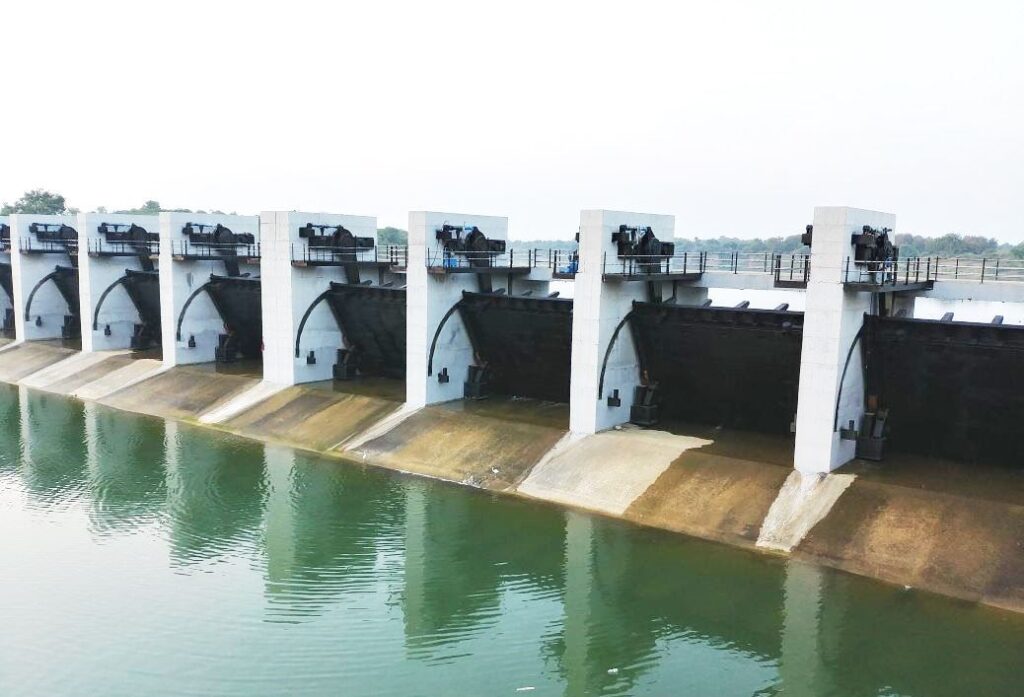
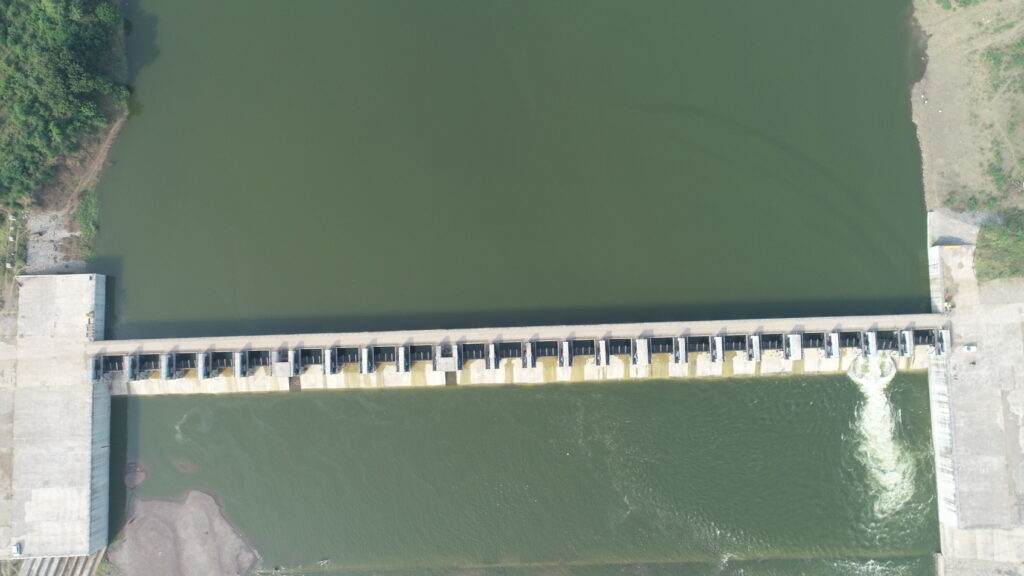
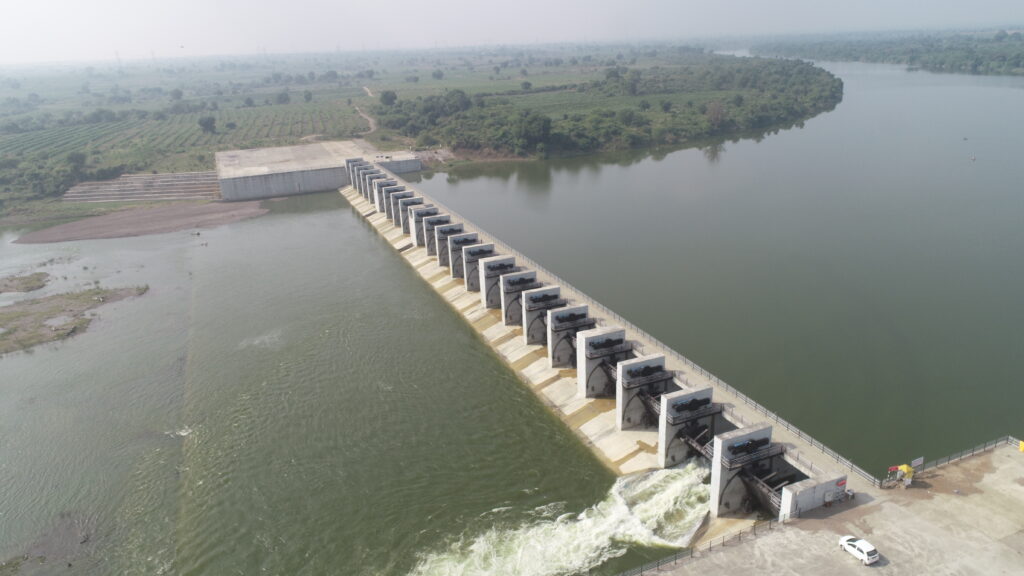
Water crisis is prevalent across the entire state of Maharashtra, but about 50 villages which lie along a 25km stretch of the Wardha river have a different story to tell. Even through the vulnerable period of summer, when the true faces of water crisis present itself to the villages of Maharashtra, the people residing at Warora and Maregaon tehsils have faced no such effects. This is all thanks to the Submersible bank type barrage, with Godbole type automatic tilting gates built over the Wardha river near Marda village.
Wardha river is the lifeline for all the towns and villages alongside it and also 21 large scale industries with dozens of other smaller ones located in MIDC’s (Maharashtra industrial development corporation’s) stretch through the district.
After sensing a future water crisis, MIDC Constructed the barrage fairly recently about 5 years ago. The barrage has FRL (combination of a filter, regulator and lubricator into a single component) of 187.5m which is 8.5m above average river bed level of 179m in order to contain an entire storage of 21 MM3 (Force Field) within the banks and along with it, a design discharge of 16,079m^3/s. It has a maximum height of around 42m with Average bank level at location being 189m.
Its HFL (High flood level) is 194.54m, which is above 7m FRL and 5.5m above bank level at location. The ferruginous red shale is available at various depths from Reservoir level of 170m with very low permeability and SBC.
The barrage with Godbole automatic tilting gates has a storage capacity of 21.9 million cubic meter.
The backwater of the Marda barrage stretches up to the length of nearly 25km along its course. There is ample water in the wells and borewells because of a good water reserve in the river. The farmers along the river fetch the water for irrigation purposes with fishing being a thriving business as well along this stretch.
This project built at the cost of Rs.300 crore has assured better irrigation, adequate water supply to the industries and contented yield of crops.
The backwater of the Marda barrage stretches up to the length of nearly 25km along its course. There is ample water in the wells and borewells because of a good water reserve in the river. The farmers along the river fetch the water for irrigation purposes with fishing being a thriving business as well along this stretch.
There are a few notable design features of the barrage which include the tilting gates being structurally designed for sustaining submerge conditions during floods, not requiring to be stored above maximum water level during monsoons. It also does not require trestle structures and hoist bridges above the maximum water level.
The gates at Marda barrage are designed to be mechanically locked in fully open position during monsoons and are closed in post monsoon period (end of October every year) to effect storage.
They open and close automatically during smaller post monsoon floods and pass out excess discharge.
The emergency hoisting system of the barrage is designed in such a way that it does not interfere with the normal automatic operation of the gates. When the gate needs to be opened or closed while u/s water level is below
All components of tilting gates have been structurally designed to withstand hydraulic forces for maximum water level condition ( up to 194.5m) when it is mechanically locked in a fully open position. Further, these components are also designed for dynamic loading for automatic operation in the post monsoon season.
The Marda being a submersible bank type barrage, it is considerably better than the confined flow type barrage situated at Kharda on river Wardha. The barrage at Marda has 6m high Godbole type submersible automatic tilting gates with emergency hydraulic hoists whereas the one situated at Kharda has 6m high non-submersible vertical lift gates with wire rope drum type electrical hoists.
The reason why the submersible bank type barrages are significantly better than the non-submersible bank type barrages is because it has a much less capital cost with it being of a compact design barrage superstructure. There is also no need for steel trestles to store gates above maximum water level since Godbole gates remain submerged during floods whereas the vertical lift gates don’t. It also requires the least land acquisition as it does not require a high level service bridge with also the added advantage of lower operation and maintenance cost.
The barrage has connected Warora thesis in Chandrapur to Maregaon tehsil and has reduced the distance by nearly 100km.
These types of barrages are comparatively cheap and sustain water reserves throughout the year. Apart from this, they can be sources of hefty revenue against lifting of water by industries and sand lease on river beds.
With these advantages, the demand of making these types of barrages are pushed at different villages, claiming that at least four more barrages can come up on Wardha river and even more on others.